Solution architecture at scale you can trust.

ArchNGN maps your tech landscape, generates solution design, and guards deployments with one unified model.

Connect to the systems you already use

Read-only access to your cloud accounts, repositories, object storage and documentation. No agents to deploy, no migration, and nothing is ever written back to your estate.

Choosing a connector type in ArchNGN

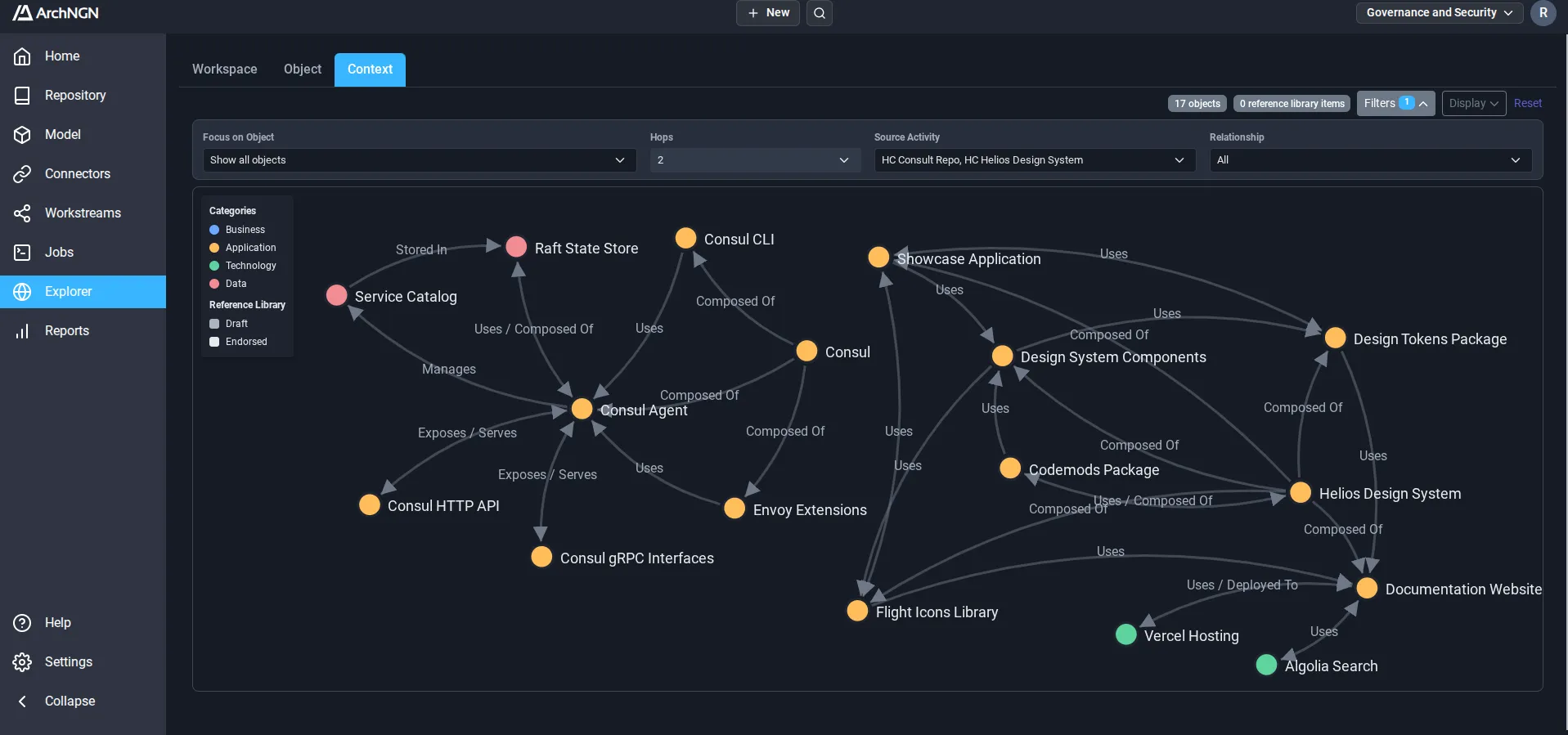
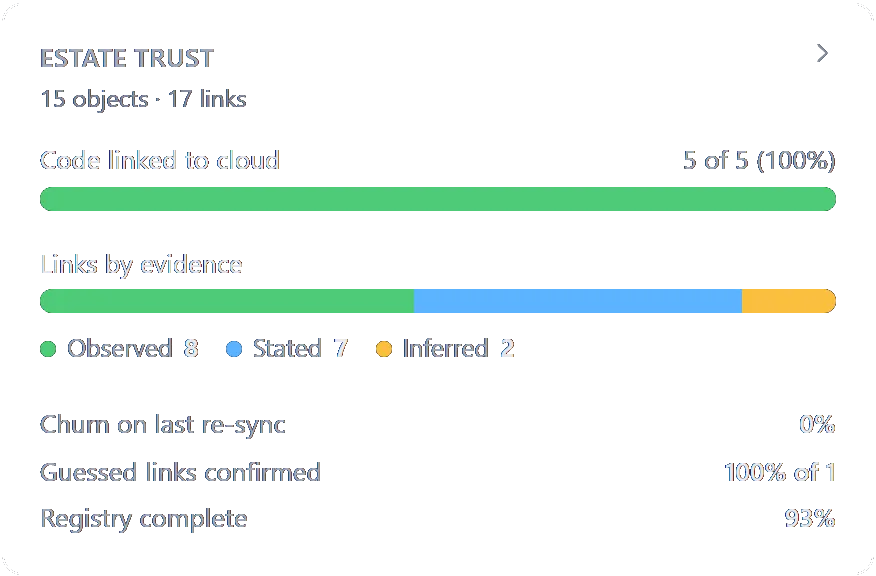
ArchNGN maps what is actually deployed and endorsed

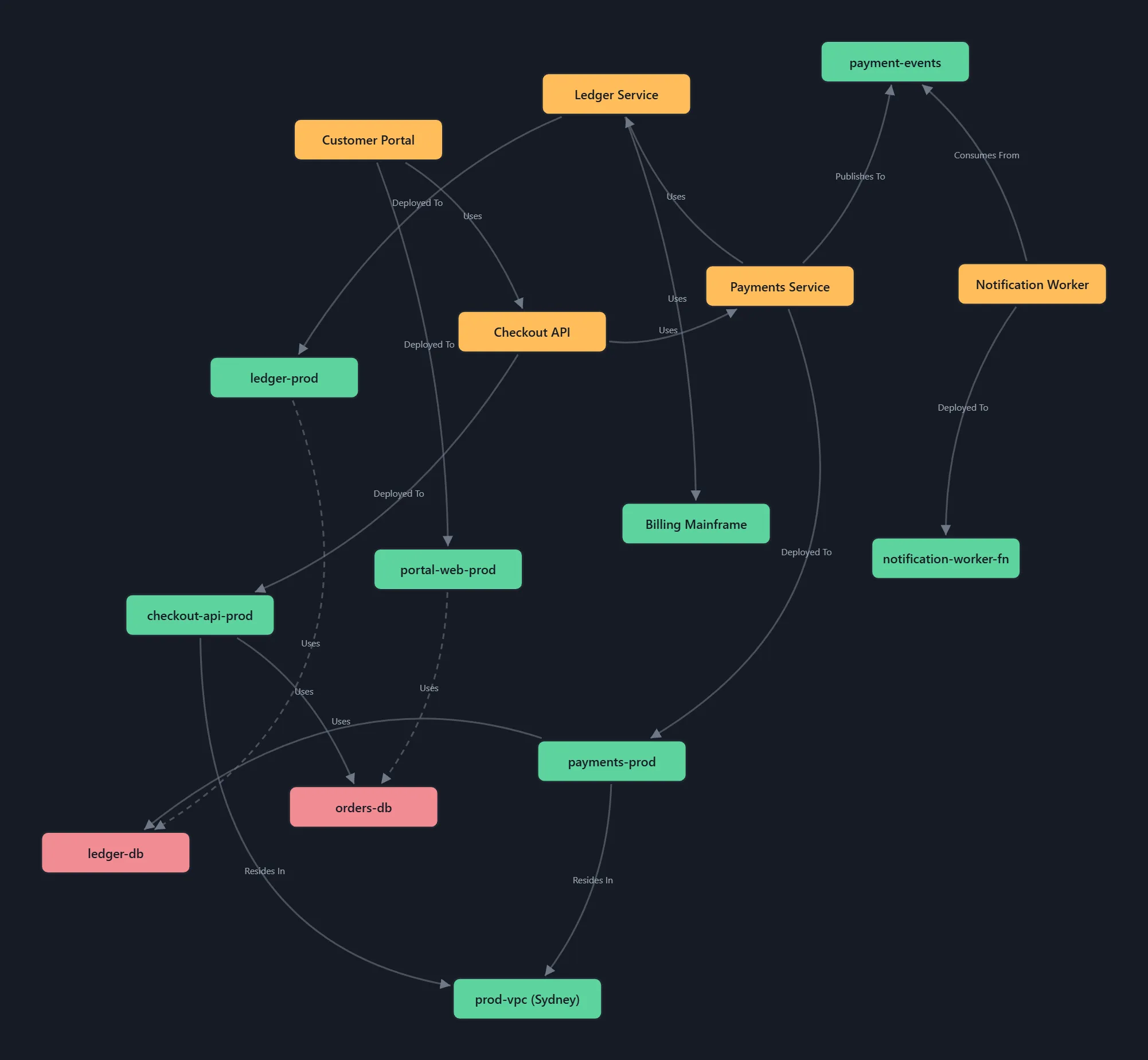
Systems, applications, interfaces, data domains and their dependencies, with the owners and standards that apply to each. Re-read on a schedule, so the model never drifts from reality.

ArchNGN workspace explorer showing systems and their dependencies

Generate designs grounded in your business

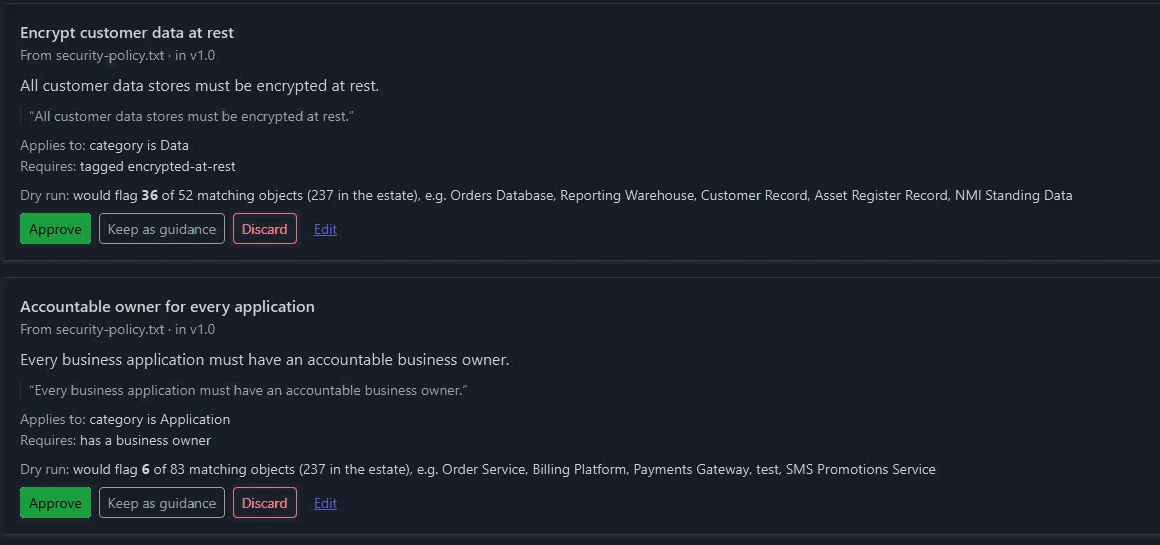
Generate new designs, reverse-engineered structure, forward-engineered documentation, and design reviews, with every output grounded in your model, your standards, and your context.

ArchNGN automation studio

Your decisions travel into delivery

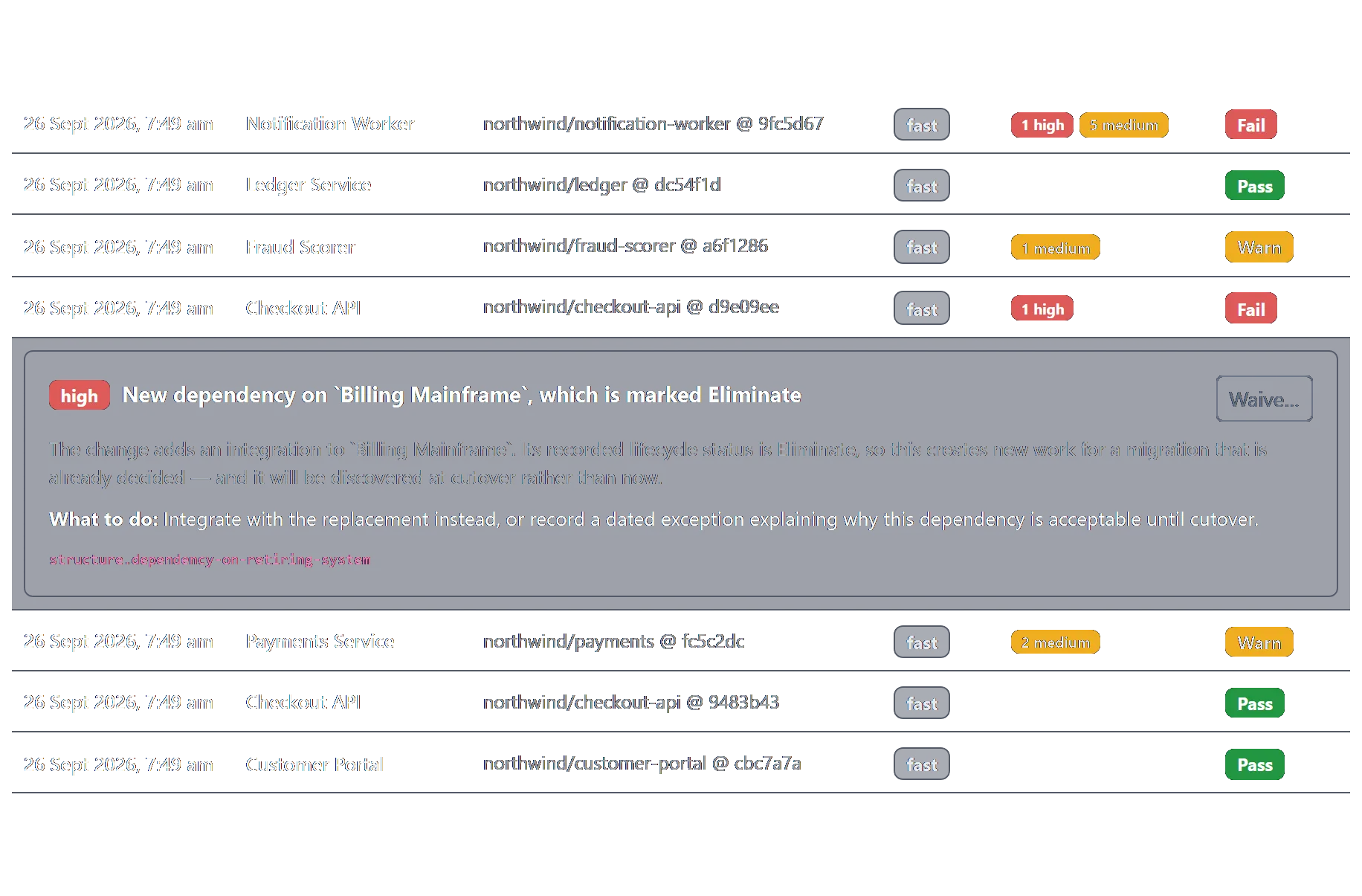
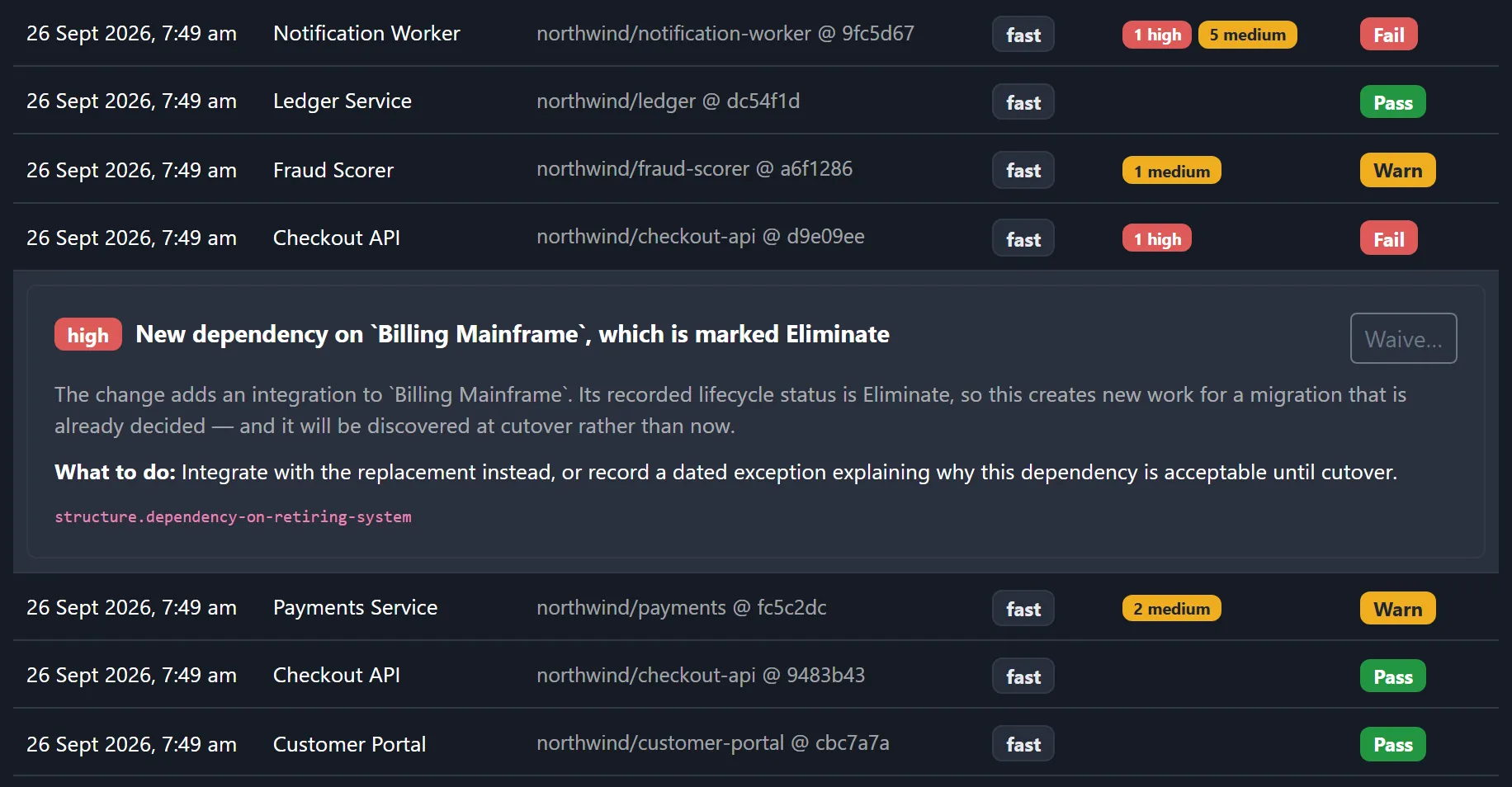
The model does not stop at the architects. The MCP server gives AI coding agents your approved patterns and existing objects. The API lets pipelines grade a change against your standards before it ships, annotating the offending line of the pull request.

Read the design-check docs →

- uses: archngn/archngn-app/integrations/github-action@main
  with:
    token: ${{ secrets.ARCHNGN_TOKEN }}
    diff-against: origin/${{ github.base_ref }}
    artifacts: |
      openapi=openapi.yaml
{
  "name": "Integration Standard 4.2",
  "intent": "Keep money movements reconcilable
             within one transaction boundary.",
  "rationale": "Payments reconciliation is audited
                end-to-end; a synchronous call keeps
                the ledger write inside the caller's
                transaction.",
  "owner": "Payments Architecture"
}

Architecture and Design Artifacts automatically generated from your business context

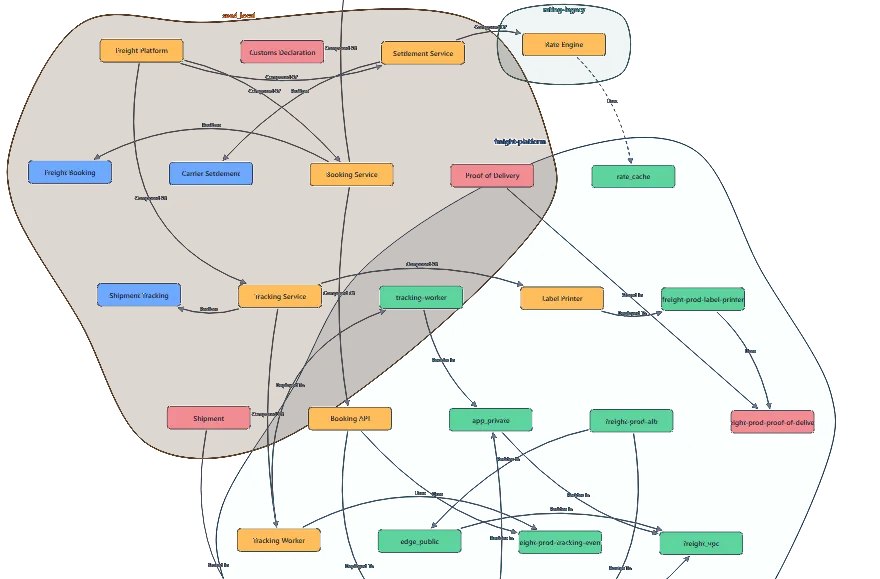
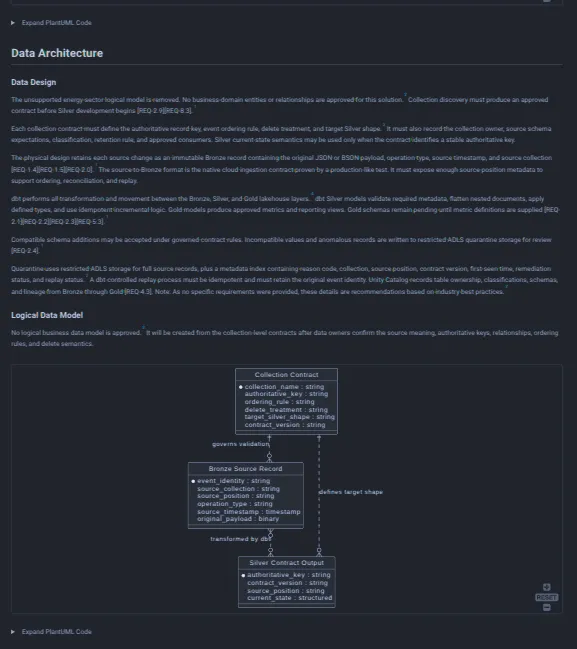
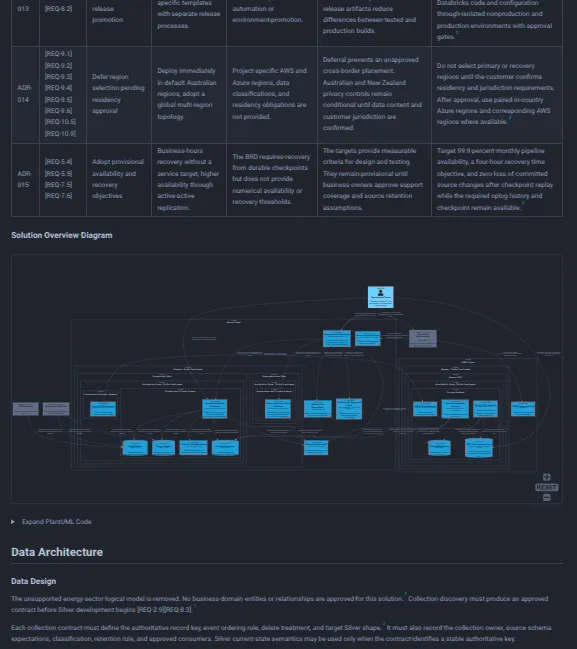
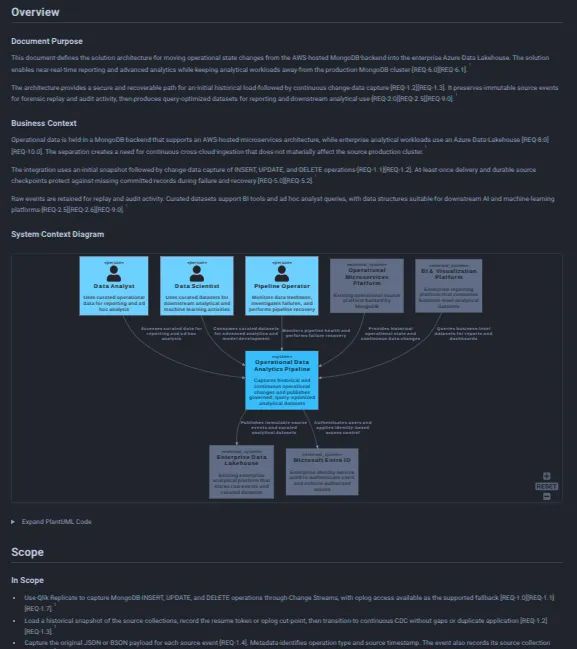
Solution designs, C4 and cloud diagrams, interface and dependency maps, registers, control mappings, design reviews. The documents your architects, engineers and compliance specialists write by hand, generated against the live model in minutes.

Generated design document: interface and dependency map
Generated design document: component design and component diagram
Generated design document: overview, business context and system context diagram

Solution design documents

Requirements in, implementation-ready design out, matched to your standards and existing objects. Days of authoring become minutes of review.

Current-state and dependency maps

Interface flows, dependency graphs, technology portfolio views. The archaeology that opens every migration or engagement.

Control and compliance mappings

Assess a design or estate against ISO 27001, SOC 2, NIST, PCI DSS, CPS 234 and Essential Eight. Evidence gathering automated.

Design reviews

Evaluate any design against internal standards or requirement sets, with gaps listed and traceable back to the objects they affect.

Connects to what you already run

Connect ArchNGN to the systems where your technology landscape already lives: repositories, cloud accounts, object storage and documentation. The discovery engine maps your baseline architecture and keeps the model in sync, giving you continuous transparency over the estate without manual upkeep.

AWS
GCP
Azure Cloud
AWS S3
GCP GCS
Azure Blob
API
MCP
GitHub
Azure DevOps
GitLab
Bitbucket
SharePoint
More coming soon

Designed for the teams designing the future. Consultancies, architects, security leaders, and due diligence teams.

Consultancies

Compress discovery from weeks to days on every engagement. Bill the thinking, not the groundwork.

Architecture teams

A defensible current-state picture before the migration or board paper, kept current without staffing it.

Security & compliance

Map controls onto the estate that actually exists, not the one in last year's diagram.

Due diligence

Reverse-engineer a target's estate from read-only access, inside the diligence window.

See it run against your own estate

Connect one cloud account or repository in a working session, and see what ArchNGN finds, and what it generates from it.