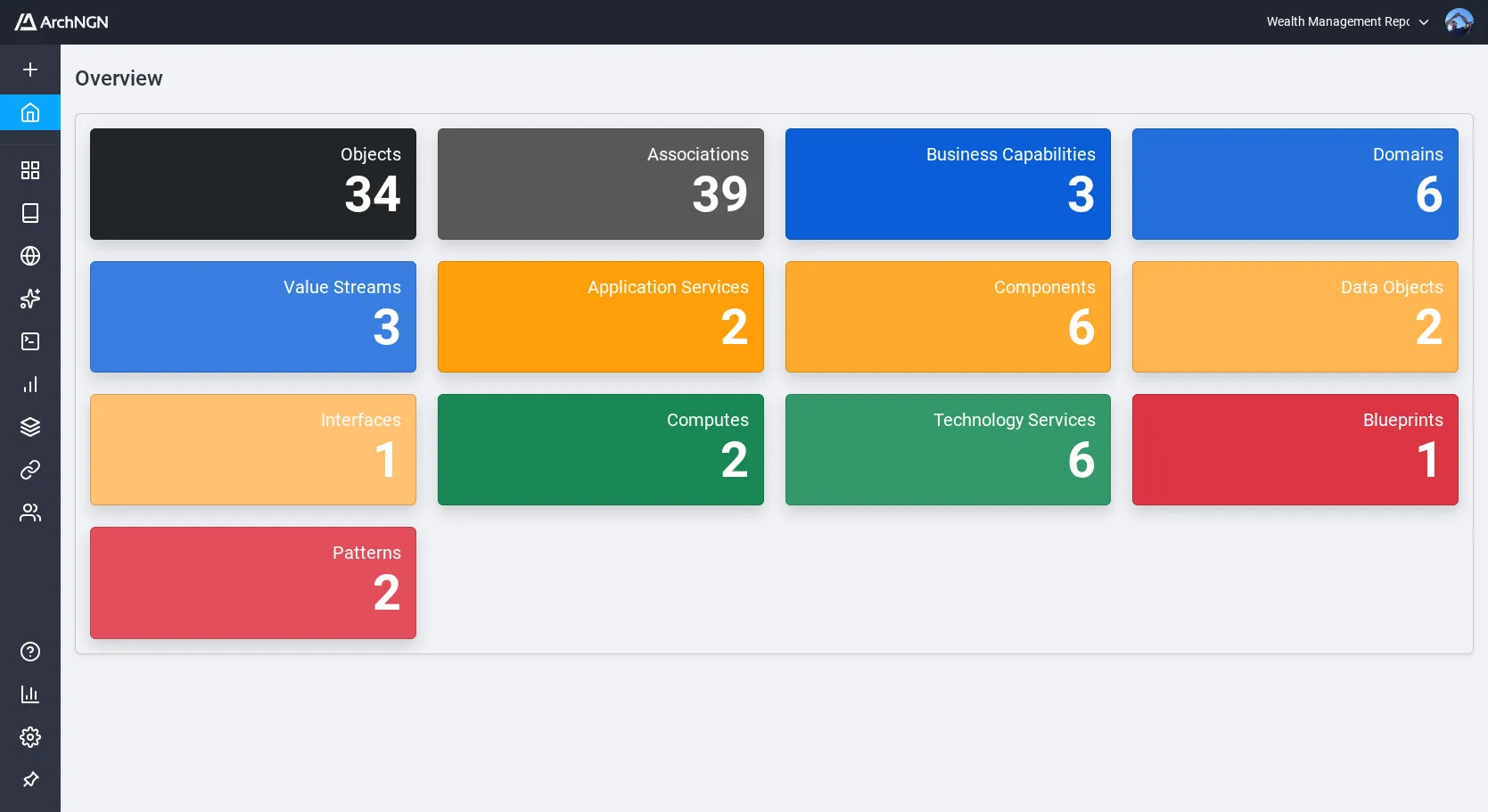
Overview
ArchNGN is an enterprise intelligence platform for managing and understanding your organisation’s technology landscape. It provides a structured, collaborative environment where architects, engineers, and technology leaders can model, analyse, and govern the systems that power their business.
Main Concepts
Section titled “Main Concepts”ArchNGN is built on a small set of concepts that you will see referenced throughout the platform and these docs.
Account
Section titled “Account”An Account is your organisation’s tenant on the platform — a fully isolated container for users, workspaces, and data. Account Admins manage users, roles, and platform-wide settings.
Workspace
Section titled “Workspace”A Workspace is an isolated container within an account for organising architectural data. Each workspace has its own objects, associations, jobs, and integrations, allowing teams to model different domains, lines of business, or value streams independently.
Objects & Associations
Section titled “Objects & Associations”Objects represent technical and business assets — applications, servers, APIs, capabilities, data entities. Associations define directional relationships between them, building the dependency graph that powers impact analysis and visualisation.
Integrations
Section titled “Integrations”Integrations connect ArchNGN to external systems such as GitHub, ingesting metadata to keep your architectural model aligned with what is actually deployed.
Automations
Section titled “Automations”Automations are AI-powered workflows that generate architecture designs, reverse-engineer existing systems, produce implementation documentation, and review designs against best practices.
Registry
Section titled “Registry”The Registry is the centralised, searchable view of all objects and associations within the active workspace — the primary place to browse and manage your architectural data.
Reports
Section titled “Reports”Reports provide interactive visualisations and pre-built viewpoints — graph explorer, capability models, technology portfolios, application landscapes — to communicate architectural insight to different stakeholders.
Who It Is For
Section titled “Who It Is For”| Role | How ArchNGN Helps |
|---|---|
| Enterprise Architects | Model and govern the full technology landscape across business, application, and technology layers. |
| Solution Architects | Design new systems with AI-assisted automation and validate designs against organisational standards. |
| Engineering Leaders | Gain visibility into system dependencies, technology portfolios, and lifecycle status. |
| Business Stakeholders | Access read-only reports and visualisations to understand how technology supports business capabilities. |
Ready to get hands-on? Head to Getting Started.